About This Resource
These resources have been developed to help teachers to:
(i) make informed judgements about whether students are achieving the objectives contained in the Writing strand of the new, New Zealand Curriculum;
(ii) consider draft writing and decide on the most relevant and helpful next learning step.
What’s Included:
A Teacher’s Companion to Writing in the NZC
This is my version of the Writing strand, revised to make it more user-friendly. In this, I have endeavoured to maintain the essence of the Ministry’s mandated teaching objectives, but have revised the Ministry’s wording in the name of ‘plain language’ and to avoid unnecessary repetition.
Informal Assessment of Writing Progress - Years 0-6
This is a summative tool, to assist teachers in making overall judgements about whether their students are meeting the curriculum expectations for their year level. The tool includes checklists for each level (from Year 1-6), as well as writing samples to illustrate what ‘at’ writing may look like, as well as writing which is not yet ‘at’. Teachers will colour code the skills on each checklist, to show whether the student is able to do these things independently and consistently, with support, or not yet.
Informal Assessment of Writing Progress - Years 7 and 8
This is an extension to the IAWP for Years 0-6. It includes checklists for each year level, and writing samples to illustrate what ‘at’ writing may look like, as well as writing which is not yet ‘at’. These checklists are intended to be used just as the earlier year level checklists are, following the colour coding system.
The Scope and Sequence of Compositional Goals
This is for formative purposes. It lists critical goals, across four stages of writing development, in child-friendly language. It also includes advice for the level of support to give at each stage, and assessment checkpoints to help judge when the student has moved to a new stage.
A copy with pictures, for students, has also been provided.
Note that, while these goals will support progress towards the objectives of the NZC:
(i) The stages reflect broad stages in writing development, and have nothing to do with curriculum phases.
(ii) There are fewer goals in this document than in the NZC, because some objectives will not require explicit teaching - to the same extent as others will.
(iii) These goals are broken-down versions of the larger curriculum objectives.
(iv) These goals are learning objectives, while our current curriculum contains teaching objectives.
How to Slideshow
This may assist you to better understand how to use the three assessment tools.
How to Webinar video
This will also assist you to use the tools. Note that it is a live recording, and includes some diversions to topics such as how to sequence handwriting instruction in the early years. The tone is informal, but hopefully still engaging and helpful.
Note also, that Year 7-8 writing is not discussed in the webinar.
About This Resource
These resources have been developed to help teachers to:
(i) make informed judgements about whether students are achieving the objectives contained in the Writing strand of the new, New Zealand Curriculum;
(ii) consider draft writing and decide on the most relevant and helpful next learning step.
What’s Included:
A Teacher’s Companion to Writing in the NZC
This is my version of the Writing strand, revised to make it more user-friendly. In this, I have endeavoured to maintain the essence of the Ministry’s mandated teaching objectives, but have revised the Ministry’s wording in the name of ‘plain language’ and to avoid unnecessary repetition.
Informal Assessment of Writing Progress - Years 0-6
This is a summative tool, to assist teachers in making overall judgements about whether their students are meeting the curriculum expectations for their year level. The tool includes checklists for each level (from Year 1-6), as well as writing samples to illustrate what ‘at’ writing may look like, as well as writing which is not yet ‘at’. Teachers will colour code the skills on each checklist, to show whether the student is able to do these things independently and consistently, with support, or not yet.
Informal Assessment of Writing Progress - Years 7 and 8
This is an extension to the IAWP for Years 0-6. It includes checklists for each year level, and writing samples to illustrate what ‘at’ writing may look like, as well as writing which is not yet ‘at’. These checklists are intended to be used just as the earlier year level checklists are, following the colour coding system.
The Scope and Sequence of Compositional Goals
This is for formative purposes. It lists critical goals, across four stages of writing development, in child-friendly language. It also includes advice for the level of support to give at each stage, and assessment checkpoints to help judge when the student has moved to a new stage.
A copy with pictures, for students, has also been provided.
Note that, while these goals will support progress towards the objectives of the NZC:
(i) The stages reflect broad stages in writing development, and have nothing to do with curriculum phases.
(ii) There are fewer goals in this document than in the NZC, because some objectives will not require explicit teaching - to the same extent as others will.
(iii) These goals are broken-down versions of the larger curriculum objectives.
(iv) These goals are learning objectives, while our current curriculum contains teaching objectives.
How to Slideshow
This may assist you to better understand how to use the three assessment tools.
How to Webinar video
This will also assist you to use the tools. Note that it is a live recording, and includes some diversions to topics such as how to sequence handwriting instruction in the early years. The tone is informal, but hopefully still engaging and helpful.
Note also, that Year 7-8 writing is not discussed in the webinar.

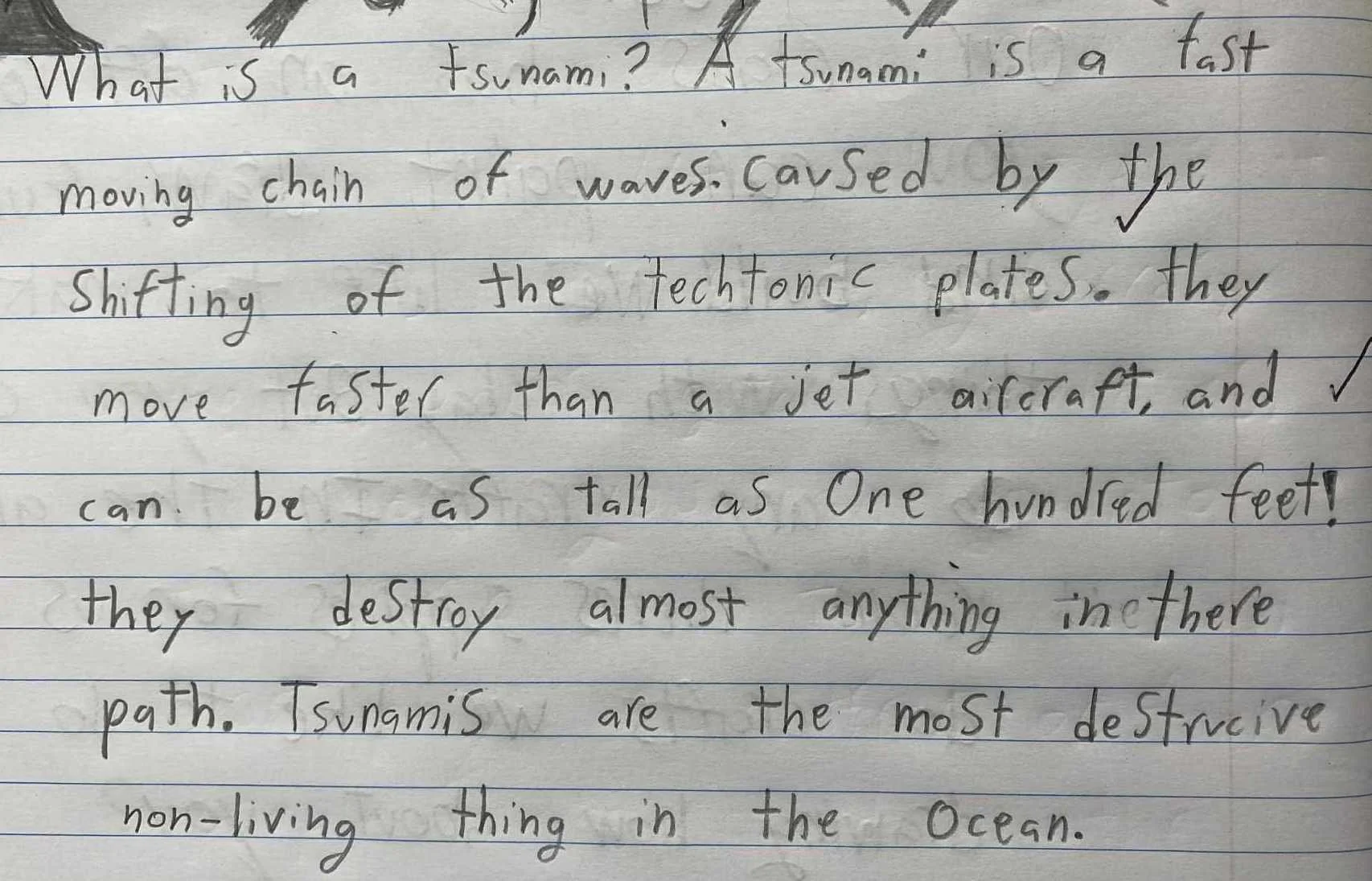 Image 1 of 1